
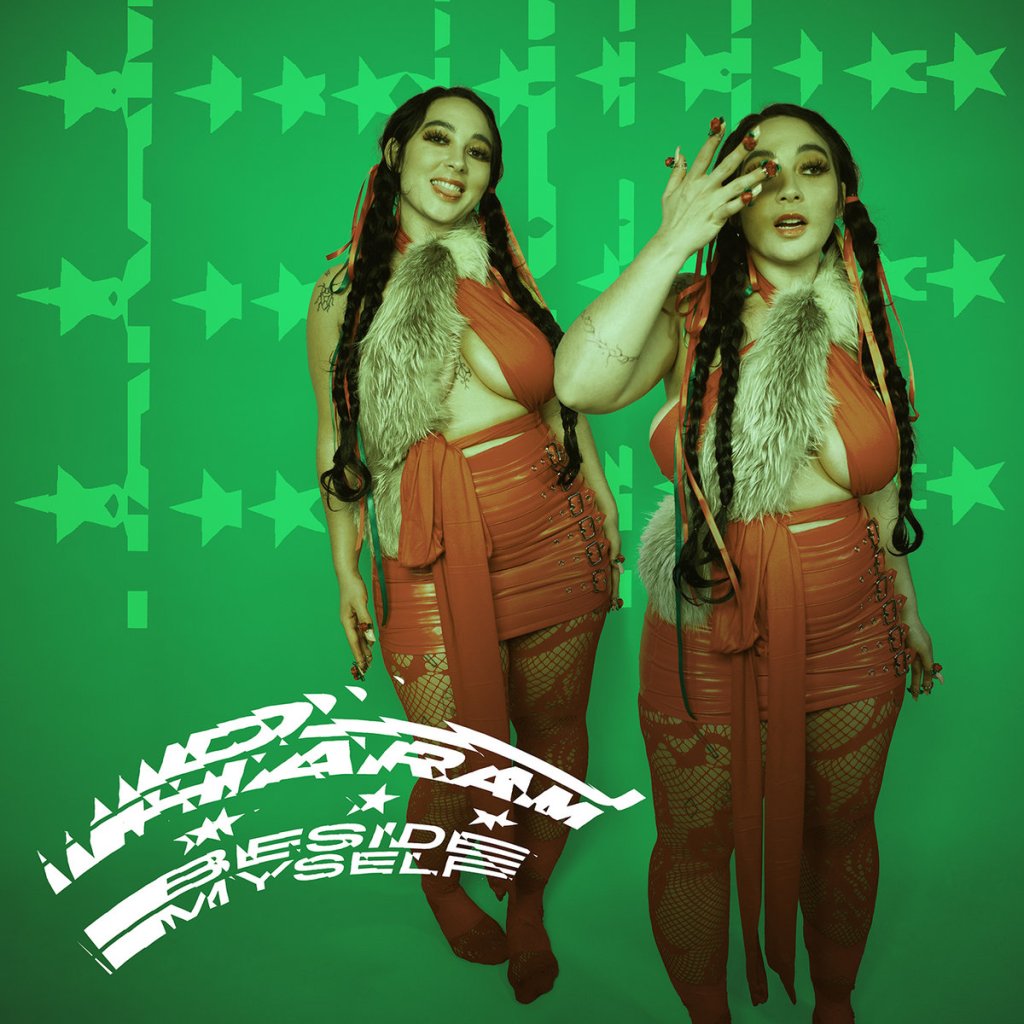
DJ Haram’s first full-length record, ‘Beside Myself,’ channels fury into sound, weaving together club rhythms, Southern rap cadences, and Middle Eastern instrumentation. The title captures an emotional breaking point—a response to genocide, systemic tokenization, and the hollow commodification of identity. Over frenetic 808s and collaged city noise, the album builds a clamorous, defiant world.
Having emerged from East Coast underground circles, Zubeyda Muzeyyen (DJ Haram) now collaborates here with artists like Armand Hammer, Moor Mother, and BBymutha. The result is both abrasive and cathartic: strings wail, trumpets blur into haze, and blown-out drums propel verses about erasure and resistance. Tracks like ‘Do u Luv me‘ fuse Jersey club with industrial percussion, while ‘Stenography‘ pairs tense orchestration with rapid-fire lyricism. Even in moments of haunting quiet—a sparse piano piece, a weary subway recording—the tension never dissipates.
This is not a polished call for unity, but an urgent, sonic protest. Muzeyyen rejects easy categorization or representational burdens; her work operates as “anti-format audio propaganda.” A sampled line from Nawal El Saadawi late in the album insists that creativity isn’t about genius—it’s about expression. ‘Beside Myself’ is exactly that: a raw, collective outcry, louder and more alive for its refusal to soften.
Discover more from Architects and Heroes
Subscribe to get the latest posts sent to your email.
