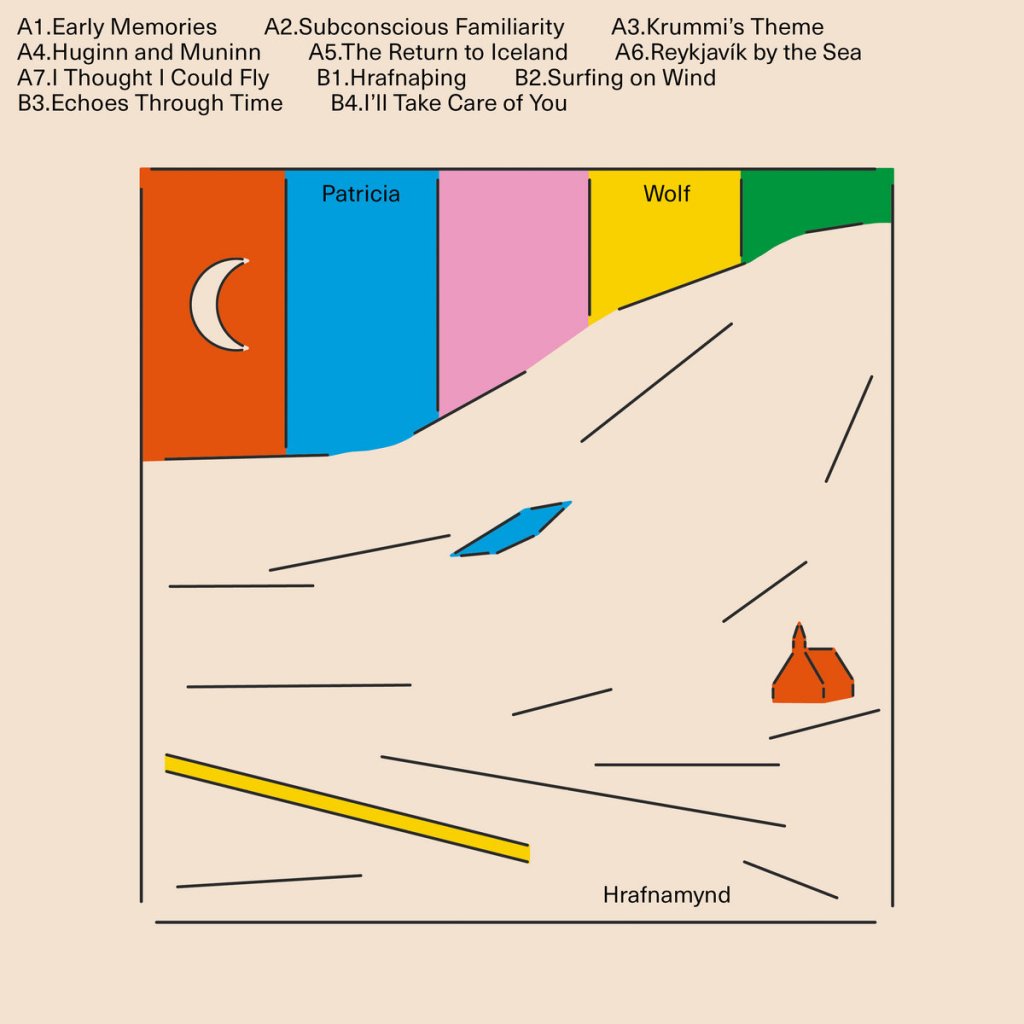
20 for 2025 – Patricia Wolf: Hrafnamynd 

The Pacific Northwest holds a deep, almost holy allure for its inhabitants—a feeling born from immense landscapes, rich ecosystems, and the constant presence of water. For Portland ambient musician Patricia Wolf, it is the region’s birds that have most deeply inspired her work. She travels widely, capturing audio from the environment: birdsong, rivers, winds, and the land itself. This extensive practice is fueled by a profound connection to nature.

It was this specific passion for birds that led Wolf to compose the score for Hrafnamynd, a documentary by Portland filmmaker Edward Pack Davee. The film traces Davee’s childhood years in Iceland. Wolf’s music moves in subtle harmony with the imagery, woven with field recordings she gathered during a dedicated trip to Iceland. “When I was working on the sound for the film,” Wolf explains, “I brought recording equipment knowing that Icelandic people would be watching.” She notes that the ambient sounds of any place—its nature, its terrain—are distinct; even an untrained ear would detect the difference between the Pacific Northwest and Iceland.

Released last year, *Hrafnamynd* (“raven film” in Icelandic) is built from Davee’s family slides: portraits of his family, Icelandic vistas, a Volkswagen Beetle, a whale hunt, and birds—especially ravens. Revered globally by Indigenous cultures as intelligent tricksters and messengers, ravens fascinated Davee with their inherited memories and their pervasive presence in Iceland, prompting reflections on individual and collective memory.

While the film will soon tour the Pacific Northwest and Europe, Wolf’s score will be released separately on July 11 via Barcelona’s Balmat Records. This standalone work—her first film score—extends her experimental approach, blending field recordings, unusual textures, and creative constraints. It is a collaboration born from mutual curiosity and trust.

Divorced from the film, the music invites open interpretation. Who is Krimmi? Why does their theme feature a warm nylon-string guitar? Wolf does not provide direct answers. Instead, she creates a spacious vessel for the listener’s own thoughts, emotions, and memories—a refuge from daily pressures. Much of the score was composed on a UDO Super 6 synthesizer, an instrument new to Wolf at the time. Learning its nuances introduced a playful, exploratory quality to the work.

As an independent album, the mix and sound design differ from the film version, allowing the compositions to breathe as complete pieces. Hearing the record before seeing the documentary offers a chance to build a personal relationship with the soundscape, prior to experiencing the full visual narrative.